
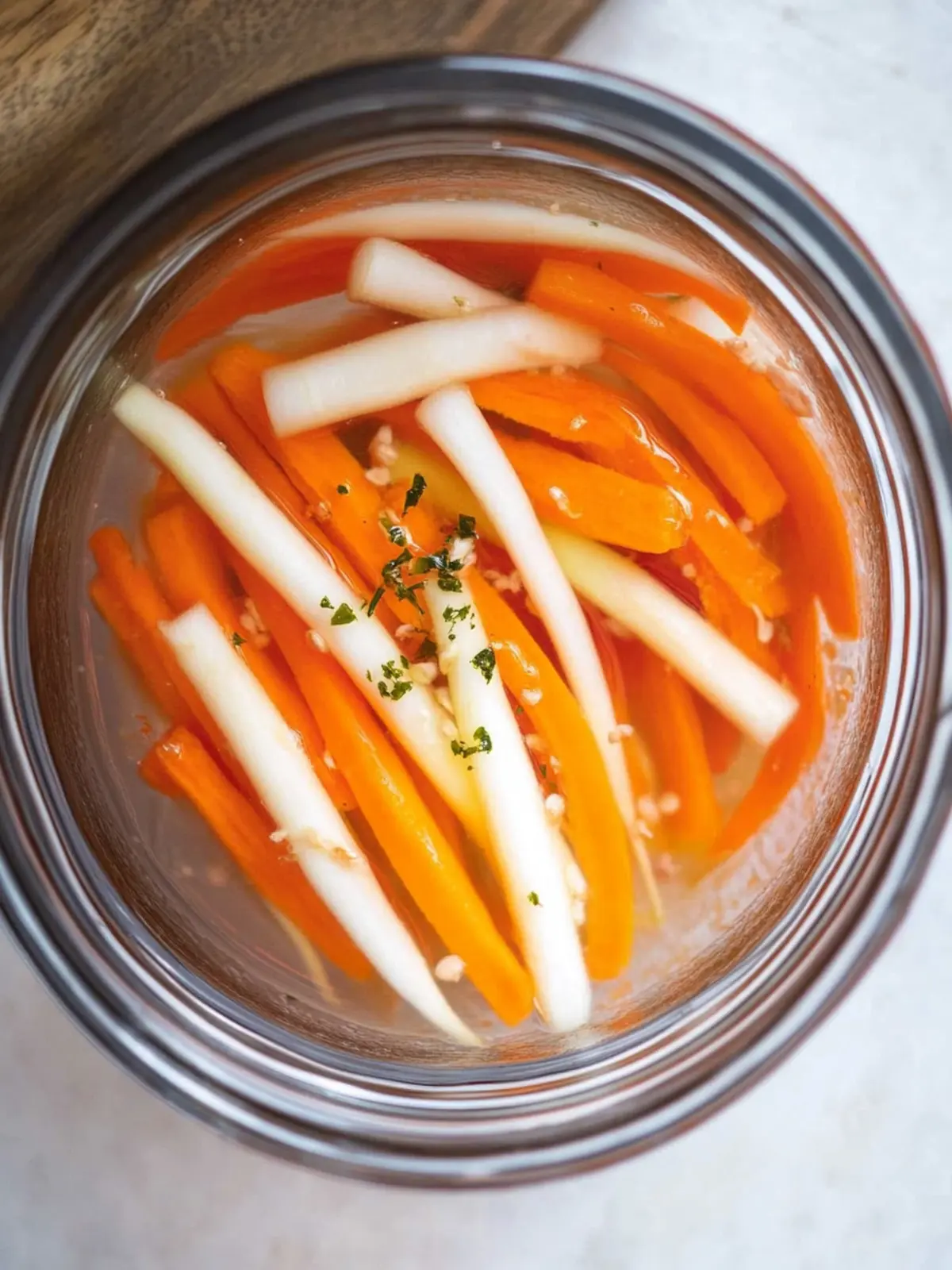
Zesty Vietnamese Pickled Carrots and Daikon for Fresh Crunch
Last Updated on February 12, 2026 by Antoni Recipes Team
There s something truly refreshing about a jar of Vietnamese Pickled Carrots and Daikon, or Do Chua, sitting in the fridge. The moment you twist the lid and catch that tangy aroma wafting up, you know you re in for a treat! This vibrant, crunchy condiment has been a beloved staple in my kitchen for years, adding a delightful zing to any meal. After a long day of mundane cooking, it feels like a little splash of joy a shortcut to elevate everything from banh mi sandwiches to simple rice dishes.
Simple and quick to prepare, this traditional recipe brings a burst of color and flavor that turns even the most basic dinner into something special. With just a handful of ingredients, you ll be on your way to mastering this tangy delight in no time. Best of all, it s vegan, gluten-free, and can sit happily in your fridge for up to three months. Get ready to brighten up your meals with this tasty touch!

Why Love Vietnamese Pickled Carrots And Daikon?
Bursting with Flavor: This Vietnamese Pickled Carrots and Daikon recipe adds a vibrant zing to your meals, bringing together sweet, tangy, and umami notes that enhance anything from banh mi to salads.
Quick and Easy: With just a handful of ingredients, you can whip up this tangy delight in no time, making your cooking quicker and more enjoyable.
Nutritional Powerhouse: It s a guilt-free addition to your diet, being vegan and gluten-free, with only about 20 calories per serving.
Long-Lasting Freshness: Store it in the fridge for up to three months, allowing you to keep deliciousness on hand for any meal occasion.
Versatile Delight: Feel free to experiment with different veggie ratios or try adding other ingredients, transforming each batch into a unique treat.
Crowd-Pleasing: This lively condiment is sure to impress guests, making it perfect for gatherings, picnics, or simply enjoying at home.
Vietnamese Pickled Carrots And Daikon Ingredients
Here s what you need for a tangy delight!
For the Brine
- 2 cups water Provides the base for the brining liquid; use filtered water for the best flavor.
- ¼ cup white vinegar Adds tanginess and acts as a preservative; substitute with apple cider vinegar for a milder taste.
- 2 ½ tbsp granulated sugar Balances the acidity of the vinegar and provides sweetness; try coconut sugar for a deeper flavor.
- 1 tsp salt Enhances flavor and aids in the pickling process.
For the Vegetables
- 1 cup daikon, julienned Offers a crunchy texture and mild flavor; you can substitute with radishes if daikon is unavailable.
- 1 cup carrots, julienned Adds sweetness and vibrant color; feel free to use more daikon if you prefer.
How to Make Vietnamese Pickled Carrots and Daikon
Boil Water: Start by boiling 2 cups of water. Once boiling, remove it from heat and let it cool in the refrigerator for about an hour, until it s cold. This ensures a crisp brine.
Julienne Veggies: While the water cools, julienne the daikon and carrots using a sharp knife or a julienne peeler for ease. Aim for thin, uniform strips to ensure even pickling.
Rinse Carrots: Rinse the julienned carrots under cold water until the water runs clear. This step is essential to prevent the vibrant orange color from bleeding into the daikon.
Mix the Brine: In a clean jar, combine the cooled water, ¼ cup of white vinegar, 2 ½ tablespoons of granulated sugar, and 1 teaspoon of salt. Stir until the sugar and salt have fully dissolved.
Add Vegetables: Add the julienned daikon and carrots to the jar, ensuring they are submerged in the brine. Seal the jar tightly with a lid.
Let it Sit: Allow the jar to sit at room temperature for 3 days, giving the flavors time to meld together. Remember to shake it gently once a day to promote even pickling.
Refrigerate: After 3 days, transfer the jar to the refrigerator. Your Vietnamese Pickled Carrots and Daikon will last up to 3 months when stored properly.
Optional: Enjoy as a topping for your favorite banh mi or tossed into salads for a refreshing crunch!
Exact quantities are listed in the recipe card below.

What to Serve with Vietnamese Pickled Carrots and Daikon?
Elevate your meals with the delightful crunch and vibrant flavor of these pickled veggies, adding a refreshing zing to various dishes.
- Banh Mi Sandwich: These pickled carrots and daikon make a bright, tangy topping, enhancing the savory flavors of the Vietnamese sandwich.
- Rice Bowls: Sprinkle over bowls of fluffy jasmine rice with grilled meats or tofu for a refreshing contrast of textures and flavors.
- Fresh Spring Rolls: Add a satisfyingly crunchy element to your spring rolls, balancing the creamy and savory ingredients beautifully.
- Tossed Salads: Include them in your salads for added crunch; their tanginess pairs perfectly with leafy greens and light dressings.
- Noodle Dishes: Mix into vermicelli bowls or stir-fries for a burst of flavor and extra crunch that brightens the dish.
- Grilled Meats: Serve alongside grilled chicken or pork as a zesty side that cuts through the richness of the meat.
- Party Platters: Offer as part of a condiment spread for gatherings, allowing guests to customize their dishes while enjoying fresh flavors.
- Mango Salad: Toss in with sliced mango and herbs for a sweet and sour salad that bursts with freshness and flavor.
- Cold Beverages: Pair with iced tea or light, fruity cocktails to enhance the refreshing experience of the meal.
How to Store and Freeze Vietnamese Pickled Carrots and Daikon
- Room Temperature: Keep your jar of Vietnamese Pickled Carrots and Daikon at room temperature for the first 3 days during the pickling process. After that, refrigerate for optimal freshness.
- Fridge: Once refrigerated, store in an airtight glass container for up to 3 months. This method helps maintain the crunch and flavor.
- Freezer: Freezing is not recommended, as it may alter the texture of the pickled vegetables. Enjoy them fresh for the best experience.
- Reheating: There s no need to reheat as this condiment is best enjoyed cold or at room temperature, enhancing the flavors of your dishes!
Vietnamese Pickled Carrots And Daikon Variations
Get creative and customize your Vietnamese Pickled Carrots and Daikon with these fun twists that add even more zing to your meals!
Spicy Kick: Add sliced jalapeños or red pepper flakes to the brine for a delightful heat. This spice variation gives each bite a fiery surprise that elevates the overall flavor profile.
Herb Infusion: Incorporate fresh herbs like cilantro or mint into the jar for a fresh aromatic twist. The herbs brighten the pickles and add an irresistible fragrance that complements your dishes beautifully.
Cucumber Addition: Toss in sliced cucumbers for an extra crunch and a refreshing twist. This variation not only adds texture but also balances the sweetness with a hydrating coolness.
Honey Sweetness: Substitute sugar with honey for a natural sweetener that deepens the brine s flavor. Honey gives your pickles a subtle richness that pairs perfectly with the tanginess of vinegar.
Garlic Boost: Include smashed garlic cloves in the brine to add pungent flavor. The garlic infuses the pickles over time, creating a robust taste sensation that amplifies every dish.
Radish Blend: Replace some carrots with radishes for a unique flavor profile. The distinct bite of radishes mingles beautifully with the carrots, creating a vibrant color contrast and a zesty crunch.
Basil Flavor: Use Thai basil leaves instead of regular fresh herbs for an intriguing aromatic experience. The sweet, anise-like flavor from the basil takes the classic pickles to a whole new level of deliciousness.
Fruit Twist: Experiment with adding thinly sliced fruits like mango or pineapple to the mix for a sweet and tangy surprise. This fruity addition transforms the pickles into a tropical treat that is perfect for summer dishes.
Expert Tips for Vietnamese Pickled Carrots and Daikon
Use Fresh Veggies: Make sure your carrots and daikon are fresh and firm for the best crunch. Stale vegetables may lead to a limp texture.
Perfecting Cuts: Aim for uniform julienne cuts to ensure even pickling. A julienne peeler can save time and achieve perfect strips.
Rinse Wisely: Rinsing the carrots is crucial to prevent them from staining the daikon. It helps maintain the vibrant colors of your Vietnamese Pickled Carrots and Daikon.
Taste Test: Sample your brine before adding vegetables. Adjust the sugar or vinegar to match your preferred level of sweetness and tanginess.
Storage Matters: For freshness, use a glass jar with an airtight lid. Avoid metal lids to prevent rusting over time.
Shake It Up: Remember to gently shake the jar daily during the pickling process to ensure that the flavors are evenly distributed.
Make Ahead Options
These Vietnamese Pickled Carrots and Daikon are a fantastic choice for meal prep, saving you precious time in the kitchen during hectic weeks! You can julienne the carrots and daikon up to 24 hours in advance and store them in airtight containers. The brine can also be mixed the day before; just ensure the water has thoroughly cooled before combining it with the vinegar, sugar, and salt. To maintain the vibrant colors and crispness, rinse the carrots to prevent color bleeding and refrigerate them promptly. When you re ready to enjoy, simply add the prepared vegetables to the brine, let them rest at room temperature for 3 days, and they ll be just as delicious and refreshing!

Vietnamese Pickled Carrots and Daikon Recipe FAQs
How do I choose the best carrots and daikon for pickling?
Absolutely! For the crunchiest and most flavorful outcome, look for firm, vibrant carrots and daikon with no soft spots or blemishes. Fresh vegetables will hold up beautifully during the pickling process and contribute to the overall texture of your Vietnamese Pickled Carrots and Daikon.
How should I store Vietnamese Pickled Carrots and Daikon?
Very simply! After letting them pickle at room temperature for 3 days, transfer your jar to the refrigerator. Store the pickles in an airtight glass container to maintain their freshness for up to 3 months. This method protects the quality while allowing flavors to deepen!
Can I freeze Vietnamese Pickled Carrots and Daikon?
It s better to skip freezing! Freezing is not recommended for this dish, as it may change the texture of the vegetables, making them less crunchy. Enjoy your pickled delights fresh from the fridge to experience their full flavor and crispness.
What if my pickled carrots and daikon are too salty or sour?
If you find your pickles too salty or sour after the pickling period, don t fret! You can balance the flavors by slicing the pickled vegetables thinner and rinsing them with water, then allowing them to marinate again in fresh brine with a bit more sugar to soften the acidity. Just remember to taste as you go to achieve your preferred balance.
Are Vietnamese Pickled Carrots and Daikon suitable for people with dietary restrictions?
Yes, indeed! This recipe is vegan and gluten-free, making it a fantastic choice for diverse dietary needs. However, always double-check the ingredients, especially the vinegar and sugar, to ensure they meet specific requirements. Remember, your tastes and preferences matter just as much!